Financial Networks Aligning Incentive Triggers with Live Dealer Sequences on Mobile Platforms
Morgan Peters · Sep 20, 2026
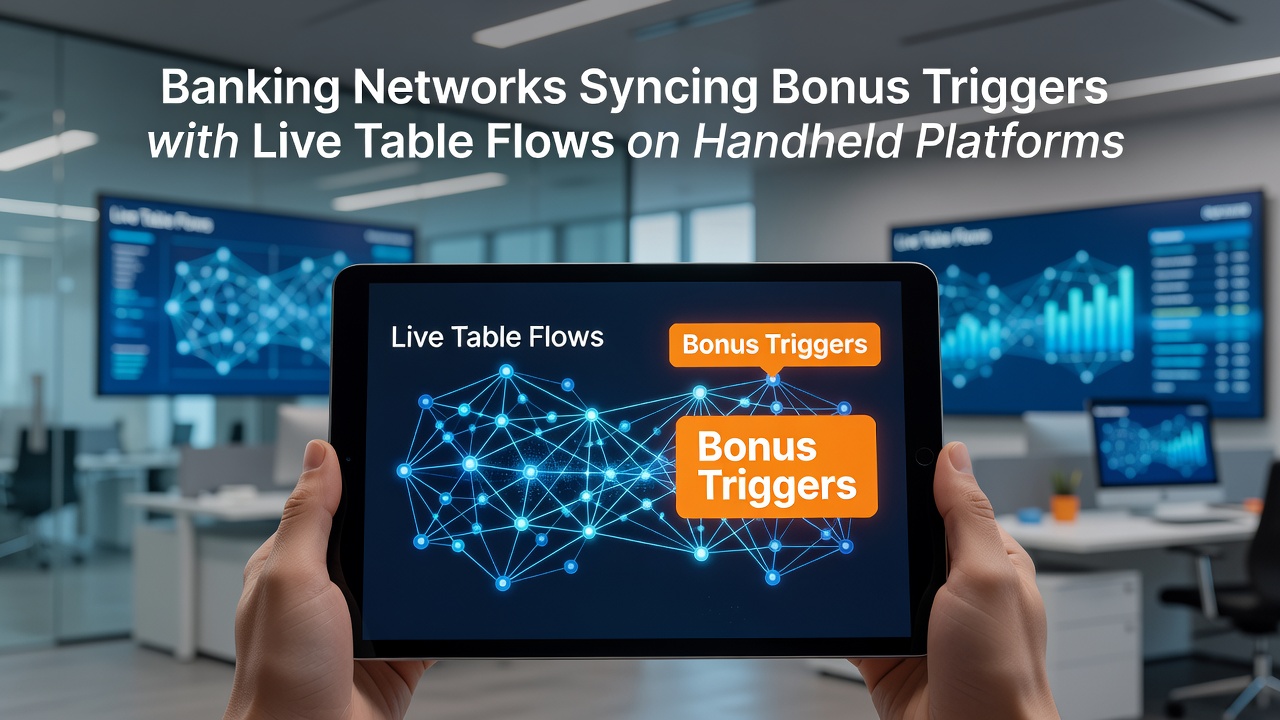
Financial Networks Aligning Incentive Triggers with Live Dealer Sequences on Mobile Platforms
Banking networks now coordinate with live table platforms to activate bonuses at precise moments during mobile dealer sessions, and this alignment relies on real-time data exchanges between payment processors and game servers. Operators connect their systems through secure APIs that monitor table outcomes while simultaneously checking player transaction histories, which allows rewards to appear without interrupting gameplay on smartphones or tablets.
Core Mechanisms Behind the Synchronization
Payment gateways transmit encrypted signals to gaming engines the moment a deposit clears or a withdrawal processes, and these signals trigger conditional bonuses tied to specific live table events such as consecutive wins or participation in particular game variants. Developers embed timestamp protocols so that the bonus activation matches the exact flow of cards or spins on the dealer side, reducing latency to under two seconds on most handheld networks. Research from the University of Nevada, Las Vegas Center for Gaming Research indicates that such integrations have expanded across multiple jurisdictions since 2024, with data showing improved retention metrics when rewards sync directly to live sequences.
Hardware-level encryption on mobile devices further supports these flows by validating each transaction before the bonus code reaches the live table interface. Network operators test these connections against varying signal strengths, ensuring consistency whether users connect through 5G or Wi-Fi, and the process avoids separate login steps that once delayed reward delivery.
Developments Observed Through September 2026
By September 2026 several regional regulators had updated their technical standards to require explicit logging of bonus triggers alongside live table data streams. The New Jersey Division of Gaming Enforcement published revised guidelines that mandate audit trails for every synchronized reward event, and these rules apply to all handheld platforms operating within state borders. Industry reports compiled by the European Gaming and Betting Association reveal that similar frameworks emerged in parts of Europe during the same period, with emphasis on separating payment data from game outcome randomness to maintain fairness standards.

Platform providers responded by releasing updated software development kits that embed banking callbacks directly into live dealer modules. One documented implementation involved routing bonus eligibility checks through the same channel that handles bet settlements, which eliminated the previous need for parallel servers. Observers note that this approach cut average processing times while preserving the sequential order of table events and reward notifications.
Security and Compliance Layers
Encryption standards such as TLS 1.3 now wrap both the financial data packets and the game-state updates that travel between banking networks and mobile live tables. Compliance teams run continuous penetration tests focused on the sync points where bonus triggers intersect with dealer streams, and any detected anomaly halts the reward flow until manual review occurs. Figures released by Canadian provincial gaming authorities in mid-2026 showed a measurable decline in disputed transactions after operators adopted these unified security protocols across handheld formats.
Multi-factor authentication remains active for the banking side, yet it does not extend into the live table session itself once the initial sync completes. This separation keeps the dealer experience fluid while still satisfying know-your-customer requirements at the payment layer. Technical documentation from major software suppliers describes fallback mechanisms that reroute bonus signals through secondary banking partners if the primary connection encounters delays.
Future Integration Patterns
Additional layers under development include predictive analytics that anticipate bonus eligibility based on early patterns in a live table round, with the banking network pre-authorizing the reward before the round concludes. Such pre-authorization relies on anonymized historical datasets rather than real-time personal identifiers, which maintains regulatory separation between financial records and game results. Operators testing these features in controlled environments during September 2026 reported stable performance across different device operating systems.
Cross-border operators face extra complexity because each jurisdiction maintains distinct rules for how banking data may interface with live gaming streams. Harmonization efforts continue through international working groups that compare audit requirements and data retention periods, yet full alignment remains ongoing.
Conclusion
Banking networks and live table platforms on handheld devices continue to refine their synchronization methods through updated APIs, encryption standards, and regulatory frameworks established by September 2026. These connections enable bonus triggers to align directly with dealer sequences while preserving transaction security and compliance across regions. Ongoing software releases and guideline revisions indicate that further technical refinements will emerge as mobile live gaming expands.